

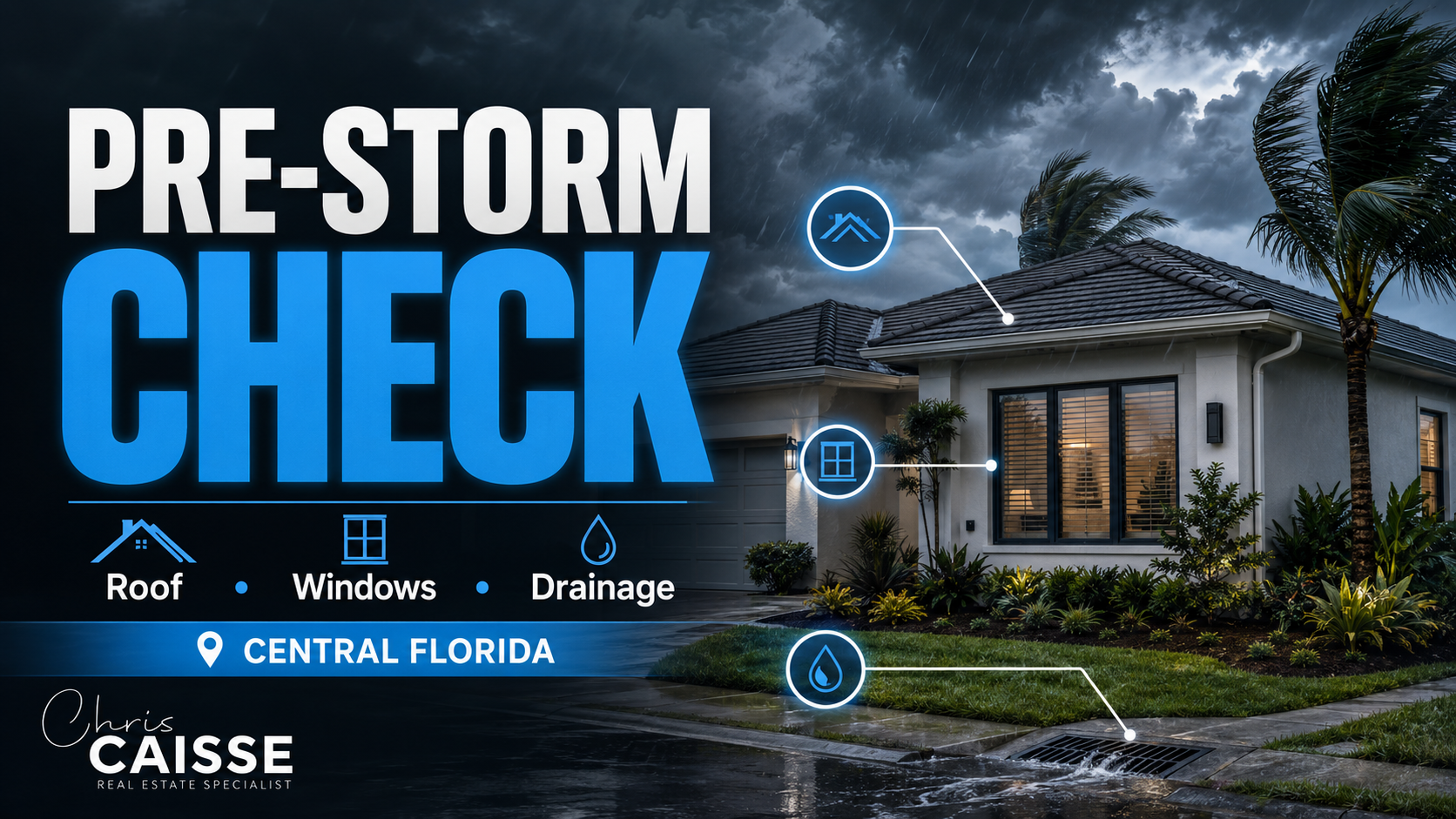
Hurricane season runs from June through November, and by July most Central Florida homeowners have already felt the first heavy rain bands move through. If you live in Florida your home faces a specific set of pressure points every storm season. As a licensed and Certified Master Inspector, I have walked through thousands of homes looking for exactly these issues. Here is what actually matters, explained the way I would walk it with you in person.
Why a Pre Storm Check Matters More Than People Think
Most homeowners wait until a storm is forecast to think about their roof or their drainage. By then, it is too late to fix anything. A slow leak that started months ago becomes a soaked ceiling during a tropical storm. A gutter that has been dumping water next to your foundation for a year becomes standing water in your garage during a heavy rain event. None of this requires a hurricane. Central Florida gets intense afternoon storms all summer long, and your home takes that pressure every single week from June through the fall.
Checking these three areas now costs you an afternoon. Skipping the check can cost you thousands in repairs, or worse, an insurance claim that gets denied because the damage was preexisting.
The Roof: Your First Line of Defense
Your roof takes more abuse in Central Florida than almost anywhere else in the country. UV exposure, afternoon thunderstorms, and the occasional tropical system all wear on it differently than a roof in a drier climate.
What to look for from the ground:
Walk the perimeter of your home and look up. You are checking for missing or curling shingles, dark streaking that suggests algae or moisture retention, and any sagging along the roofline. If you have a tile roof, common in many Villages and Citrus Hills homes, look for cracked or shifted tiles, especially near ridge lines and valleys.
What to check in the attic:
This is where most problems actually show up first. Look for water stains on the underside of the roof decking, any daylight coming through where it should not, and soft or discolored insulation. A small stain in the attic today is a ceiling repair next year if it goes unaddressed.
Roof age matters for insurance, not just performance.
Many Florida insurers now require a roof inspection or will adjust premiums based on roof age and condition. If your roof is nearing 15 years old, a professional inspection before storm season gives you documentation either way, whether that means peace of mind or an early warning to start budgeting for replacement.
Windows and Doors: The Weak Points Water Finds First
Water rarely comes through a roof in one dramatic moment. It usually finds a smaller entry point first, and windows and doors are common culprits.
Check the seals and caulking.
Run your hand along the exterior trim of every window and exterior door. Cracked, missing, or shrunken caulking is an open invitation for wind driven rain, which is the kind of rain that does not fall straight down but gets pushed sideways into every gap during a storm.
Test for proper drainage on sliding doors.
Sliders and French doors common in lanai areas throughout Central Florida homes have weep holes designed to let water drain out. Over time these get clogged with dirt, pollen, or landscaping debris. A clogged weep hole means water pools inside the track instead of draining outside.
Impact rated versus standard windows.
If your home has impact windows, they carry a real insurance benefit and are worth confirming during your wind mitigation inspection. If you have standard windows and no shutters, this is worth a conversation with your insurance agent before storm season, not during one.
Drainage and Grading: The Issue Nobody Notices Until It Rains
This is the area I see overlooked more than any other, and it is often the cheapest to fix.
Walk your property after the next heavy rain.
Notice where water pools. It should move away from your foundation, not toward it. If you see water sitting near your slab for more than an hour after rain stops, that is a grading issue worth addressing before it becomes a foundation or interior moisture problem.
Clean your gutters and check downspout direction.
Downspouts should direct water at least four to six feet away from your foundation. In many Central Florida communities, mature landscaping has grown up around downspouts over the years and now blocks proper drainage without anyone noticing.
Check for erosion near your foundation.
Small channels or bare patches of soil next to your home are early signs that water is finding a path it should not have. This is especially common in homes on a slight slope, which describes a good number of properties in Sorrento and Mount Plymouth.
The Wind Mitigation Connection
If you have not had a wind mitigation inspection in the last few years, it is worth scheduling one before storm season peaks. This inspection documents features like your roof shape, roof to wall connections, and window protection, and it can directly lower your insurance premium. I covered how the broader insurance market has shifted this year in a separate post, and a current wind mitigation report is one of the most direct ways homeowners are seeing real savings right now.
Frequently Asked Questions
How often should I have my roof inspected in Florida?
Most roofing professionals recommend an inspection once a year, ideally before hurricane season begins in June. If your roof is older than 15 years, more frequent checks are worth the small cost.
Does a wind mitigation inspection expire?
Wind mitigation inspections do not expire on a fixed schedule, but insurers typically want one that reflects current conditions. Many homeowners renew every five years or after any roof replacement or major exterior update.
Can I do this inspection myself, or do I need a professional?
You can absolutely do the ground level and visual checks described here yourself. A professional inspection adds documented findings that matter for insurance purposes and catches issues that are not visible without attic access or specialized tools.
What is the most commonly missed issue in Central Florida homes?
Drainage and grading problems get missed more than anything else. They develop slowly, do not look urgent, and often get discovered only after interior damage has already started.
Final Thought
Storm season in Central Florida is not something to fear, but it does reward homeowners who stay ahead of it. A couple of hours checking your roof, windows, and drainage now can save you a stressful call to your insurance company later.
If you are weighing whether to sell before storm season complicates showings, or you are relocating to Central Florida and want a market that understands what these homes actually need, I am happy to talk it through. You can reach me at 352-761-9492 or [email protected], or book a free 30-minute call directly at calendly.com/ccaisse24/30min.
Check out this article next