

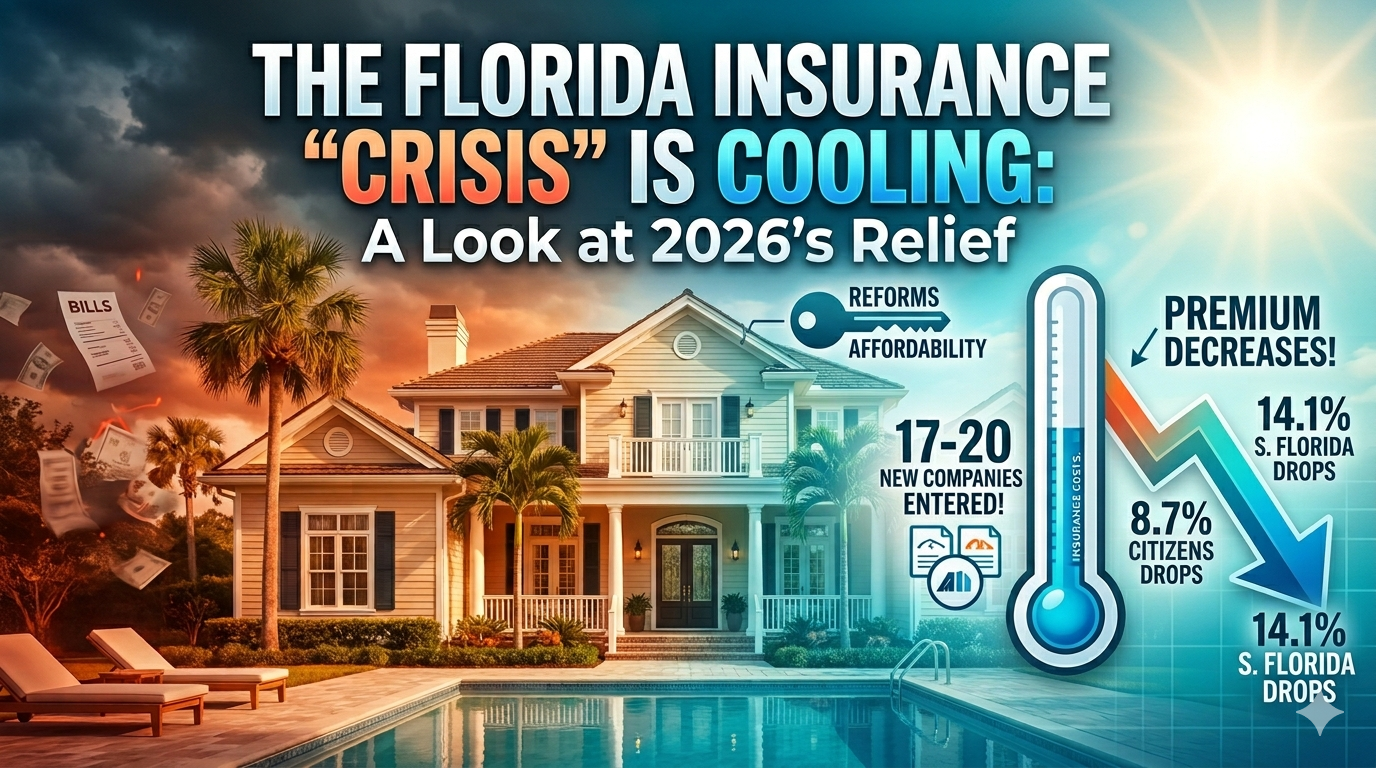
For years, the soaring cost of property insurance has cast a long shadow over the Florida real estate market, presenting a formidable hurdle for prospective homebuyers and current residents alike. However, 2026 has ushered in a new era, bringing with it the first tangible signs of relief and a much-anticipated stabilization of the state's tumultuous insurance landscape.
Governor Ron DeSantis recently announced significant statewide rate relief, a direct outcome of comprehensive legislative reforms enacted under his leadership . This proactive approach has begun to yield positive results, most notably for customers of Citizens Property Insurance, Florida's state-backed insurer of last resort. Starting in Spring 2026, these policyholders are experiencing an average premium reduction of 8.7% . This marks a pivotal moment, signaling a shift from years of escalating costs to a period of genuine financial reprieve for many Floridians.
The impact of these reforms is particularly pronounced in South Florida, an area historically burdened by some of the highest litigation-driven insurance costs. Residents in Broward, Miami-Dade, Palm Beach, and Monroe counties are seeing substantial decreases, with reductions averaging between 11.3% and 14.1% . These figures underscore the effectiveness of the legislative changes in addressing the root causes of the crisis.
Beyond Citizens Property Insurance, the broader private insurance market is also reflecting this positive trend. Several private insurers have filed for and received approval for rate decreases, further alleviating the financial pressure on homeowners. For instance, Florida Peninsula customers are seeing an 8.2% reduction, Security First customers an 8% reduction, and Universal Property & Casualty customers a 5.1% reduction . This widespread relief across both public and private sectors indicates a systemic improvement in market conditions.
Legislative Reforms: The Catalyst for Change
The turnaround in Florida's insurance market is not accidental but rather the direct consequence of strategic legislative reforms. A key component of these reforms was the elimination of one-way attorney fees and the curbing of abusive assignment-of-benefits (AOB) practices . These measures were designed to reduce frivolous litigation, which had previously been a significant driver of increased insurance costs. The sharp decline in litigation following these changes has directly contributed to lower actual losses, reduced reinsurance costs, and improved underwriting conditions across personal insurance lines .
Chief Financial Officer Blaise Ingoglia emphasized the importance of these reforms, stating, "Four years ago, our insurance market was near collapse, which is why I stood alongside our Governor to create historic lawsuit reform, cut out the waste, fraud and abuse, and strengthen our insurance market. Those reforms are working, and Florida homeowners are seeing the benefits" . Insurance Commissioner Mike Yaworsky echoed this sentiment, attributing the positive results entirely to the historic tort reforms .
A Resurgent Private Market and Increased Competition
Perhaps one of the most encouraging developments is the revitalization of Florida's private insurance market. Since the enactment of the reforms, between 17 and 20 new insurance companies have entered the state, fostering a more competitive environment . This influx of new carriers is crucial for long-term stability, as increased competition naturally drives down premiums and improves service for consumers. The market is witnessing a significant transition of policies back to the private sector, with Citizens' policies in force declining by 50% from the prior year to approximately 395,144 as of January 2025 . This represents the lowest level in 14 years and signifies a healthy return to a market where competition can thrive.
Broader Economic Impact
The positive effects of these insurance reforms extend beyond property coverage. The auto insurance market is also experiencing rate reductions, with major carriers like State Farm, Progressive, USAA, and AAA announcing significant decreases . This broader economic impact highlights the interconnectedness of insurance sectors and the far-reaching benefits of a stable regulatory environment. Even ride-sharing services like Uber have reported substantial savings for Florida riders due to lower insurance-related costs, further demonstrating the positive ripple effect of the state's legal reforms .
Conclusion: A New Horizon for Florida Homeowners
The narrative of Florida's insurance market is undeniably shifting. What was once a crisis characterized by escalating premiums and limited options is now transforming into a landscape of relief, stability, and renewed competition. The legislative reforms of recent years, coupled with the entry of new private insurers, have created an environment where homeowners can finally anticipate more affordable and accessible coverage. While challenges may still lie ahead, 2026 stands as a landmark year, offering a clear indication that the Florida insurance "crisis" is indeed cooling, paving the way for a more secure future for its residents.
References
Check out this article next